

The Pala Dynasty was one of the most important ruling dynasties in the history of eastern India. It ruled large parts of Bengal and Bihar for several centuries and played a major role in the development of Buddhism, education, art and architecture. Its rulers supported famous Buddhist learning centres and helped establish strong cultural connections between India and other parts of Asia.
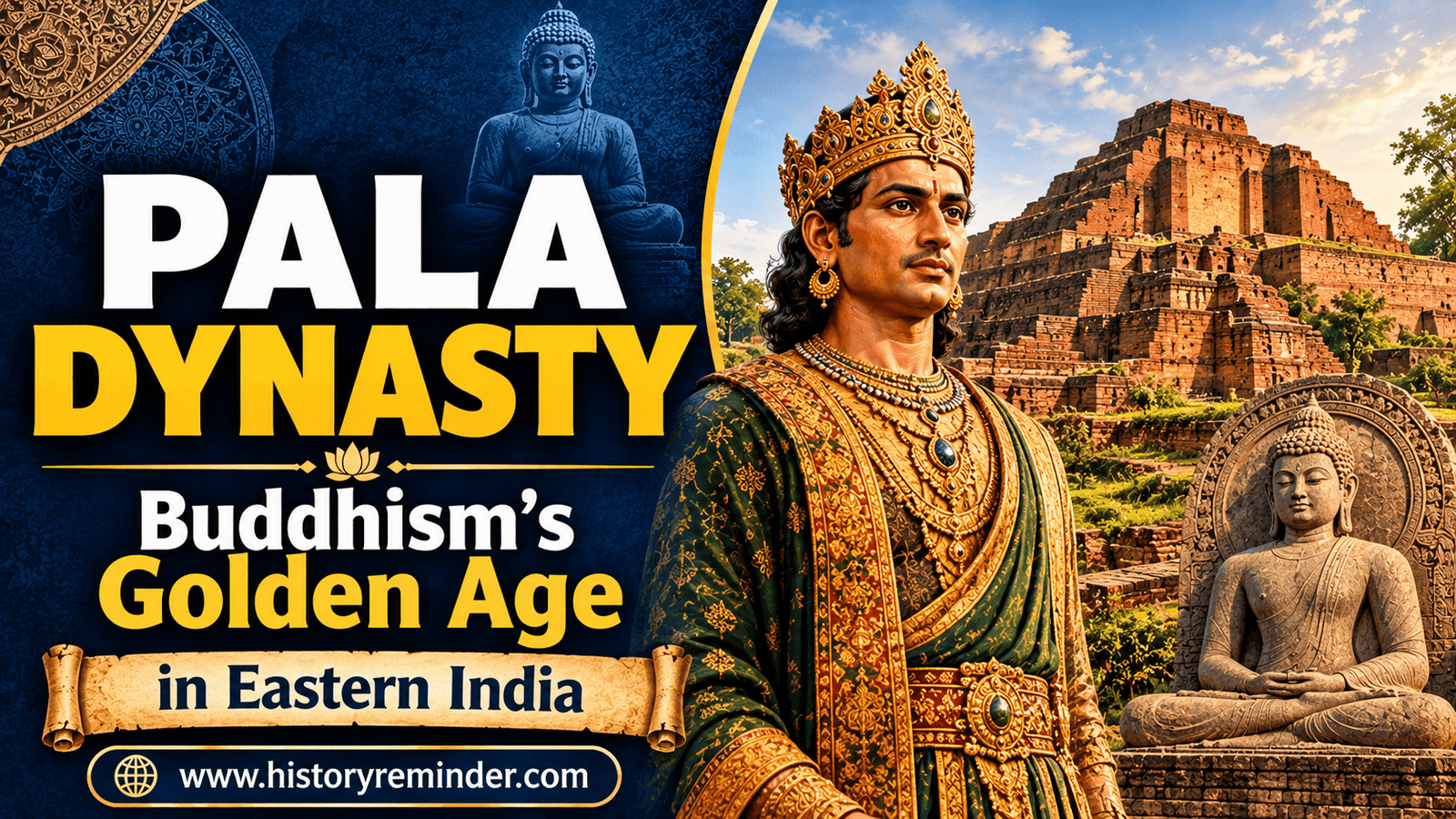
The rise of this dynasty marked an important period in the political and cultural history of the Indian subcontinent. Its kings expanded their territories, developed administrative systems and supported religious institutions. Their contributions can still be studied through inscriptions, sculptures, monasteries and archaeological remains.
- Founder: Gopala
- Approximate beginning: Mid-8th century CE
- Core region: Bengal and Bihar
- Important rulers: Gopala, Dharmapala, Devapala and Mahipala I
- Major religious association: Mahayana and Vajrayana Buddhism
- Important institutions: Nalanda, Vikramashila and Somapura Mahavihara
Origin and Rise of the Pala Dynasty
The rise of the Pala Dynasty took place during a period of political instability in Bengal. After the decline of earlier regional powers, different local rulers and chiefs competed for control. This situation created uncertainty and weakened political unity in the region.
According to historical accounts, Gopala emerged as a powerful leader when local chiefs selected him as their ruler. This event is often described as an election by regional chiefs, although historians continue to examine the exact circumstances behind his rise. His success helped establish a new ruling family and brought greater political stability to Bengal.
Gopala: The Founder
Gopala is generally recognised as the founder of the dynasty. He established his authority in Bengal during the eighth century CE. His most important achievement was bringing several politically divided areas under a single ruler.
Historical records about his reign are limited, so details of his personal life and military campaigns remain uncertain. However, his role in establishing a stable political base allowed his successors to expand their influence into neighbouring regions.
Important Rulers of the Pala Dynasty
The strength of the Pala Dynasty depended greatly on the military and political abilities of its major rulers. Some kings expanded the kingdom, while others focused on administration, religious institutions and restoring territories that had been lost.
1. Dharmapala
Dharmapala was one of the most powerful rulers of the dynasty. He succeeded Gopala and expanded the kingdom beyond Bengal into important parts of northern India. His reign is generally placed in the late eighth and early ninth centuries CE.
Dharmapala became involved in the struggle for control of Kannauj, an important political centre in northern India. This competition involved three major powers: the Palas, the Gurjara-Pratiharas and the Rashtrakutas. Historians refer to this long political competition as the Tripartite Struggle.
Dharmapala also supported Buddhist education and religious institutions. He is traditionally associated with the establishment of Vikramashila Mahavihara, which later became a major centre of Buddhist learning.
2. Devapala
Devapala succeeded Dharmapala and is often regarded as one of the most successful rulers of the dynasty. During his reign, the kingdom reached a significant level of political and military influence.
Inscriptions associated with his reign describe military campaigns in different parts of the subcontinent. However, the extent and lasting results of these campaigns should be understood carefully because royal inscriptions often presented victories in highly celebratory language.
Devapala continued the tradition of supporting Buddhist institutions. His reign is also associated with diplomatic and religious connections beyond India. One important example is the support given to a monastery at Nalanda for monks from the island of Java, traditionally identified with the Sailendra kingdom.
3. Mahipala I
After Devapala, the kingdom experienced a gradual decline in political strength. Several rulers faced challenges from regional powers and local chiefs. Mahipala I, who ruled around the late tenth and early eleventh centuries CE, played an important role in restoring the dynasty’s influence.
He recovered territories in parts of Bengal and Bihar and strengthened royal authority. His reign is considered an important phase of revival after a period of political weakness.
4. Ramapala
Ramapala was another significant ruler who attempted to restore the power of the dynasty during the late eleventh and early twelfth centuries CE. He is particularly associated with the Varendra rebellion, a major regional uprising in northern Bengal.
With the help of allies and military supporters, Ramapala managed to regain control over important territories. His reign is described in the Sanskrit historical work Ramacharita, written by Sandhyakar Nandi. This text is an important source for studying the political conditions of the period, although it also contains poetic and courtly elements.
Administration and Governance
The rulers developed an administrative system that helped them govern a large and geographically diverse kingdom. The king stood at the top of the political structure and was responsible for military leadership, revenue collection and major decisions of the state.
Regional administration depended on officials, local chiefs and subordinate rulers. These authorities helped maintain order, collect taxes and manage local affairs. In some areas, powerful landholders and local elites enjoyed considerable influence.
Revenue System
Agriculture was the main source of wealth for the kingdom. Land revenue formed an important part of state income. The government also benefited from trade, commercial activities and taxes collected from different regions.
Land grants were an important feature of the period. Rulers donated land to Brahmanas, Buddhist monasteries and religious institutions. Such grants could provide institutions with resources for education, worship and daily maintenance. They also influenced the relationship between the state and local society.
Military Organisation
The army helped rulers defend their territories and expand their political influence. It included infantry, cavalry and war elephants. Elephants were particularly important in the warfare of many early medieval Indian kingdoms.
Military success also depended on alliances with regional chiefs and subordinate rulers. These relationships could strengthen the kingdom, but they sometimes became a source of weakness when local powers challenged central authority.
Religion and the Growth of Buddhism
The Pala rulers are especially remembered for their support of Buddhism. Several kings followed or patronised Buddhist traditions, particularly Mahayana Buddhism and, in later centuries, Vajrayana Buddhism.
However, their religious policy was not limited to Buddhism. Hindu religious institutions and traditions also continued to receive support during this period. This suggests that the religious life of the kingdom was diverse and that royal patronage could extend across different communities.
Buddhist monasteries served as more than places of worship. They were centres of education, manuscript production, debate and intellectual exchange. Monks and scholars travelled between these institutions and other parts of Asia, helping Buddhist ideas spread across regional boundaries.
Education and Important Buddhist Universities
One of the greatest cultural contributions of the Pala rulers was their support for major centres of Buddhist learning. These institutions attracted students, monks and scholars from different regions.
Nalanda Mahavihara
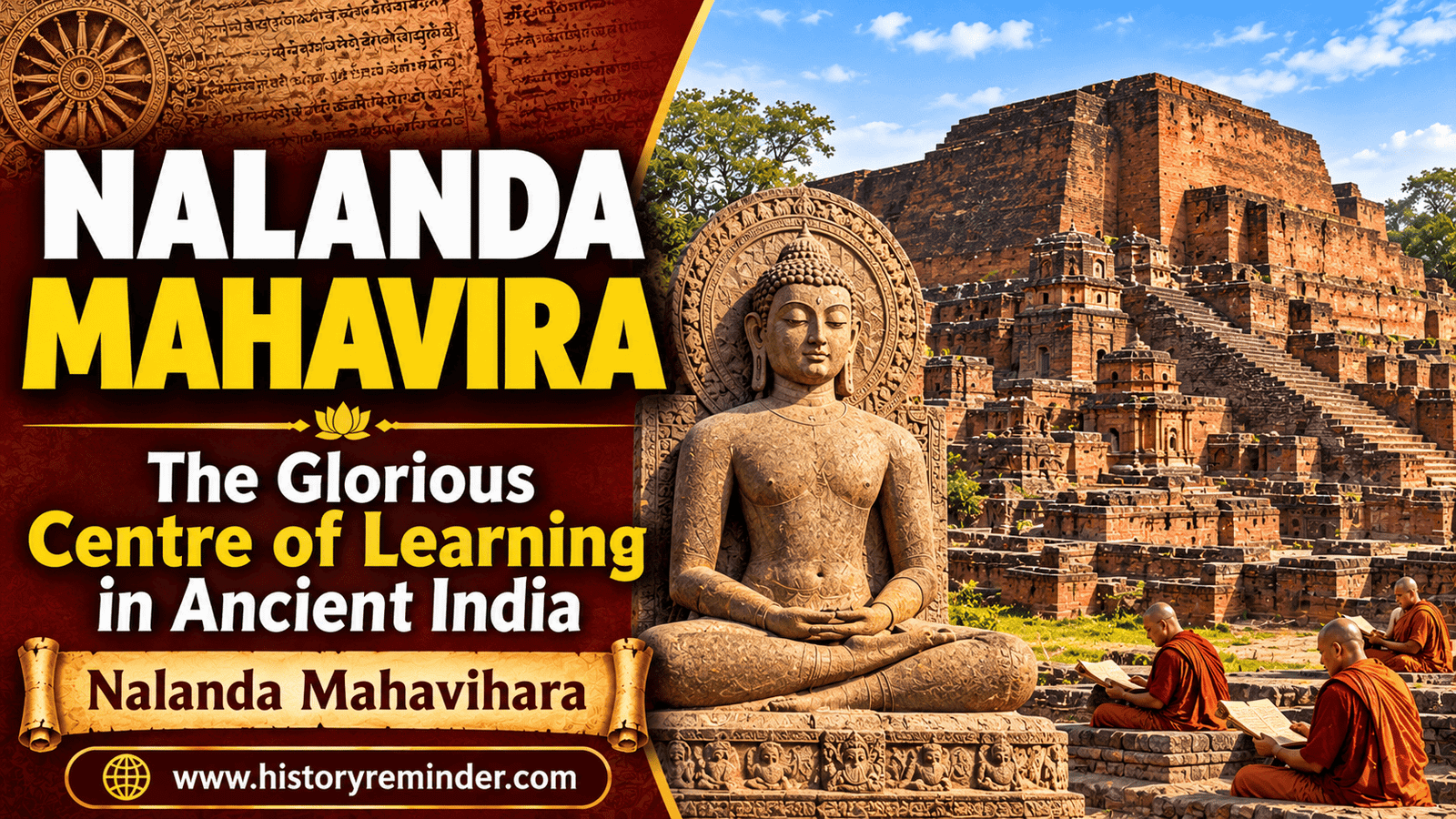
Nalanda was an important centre of higher learning that existed before the rise of this dynasty. It received continued support from different rulers, including Pala kings. Students studied Buddhist philosophy, logic, grammar, medicine and other subjects.
Vikramashila Mahavihara
Vikramashila was traditionally founded under Dharmapala and became one of the leading Buddhist educational institutions of the period. It was known for advanced Buddhist studies and attracted scholars from different parts of Asia.
One of its best-known scholars was Atisha Dipankara Shrijnana, who later travelled to Tibet and played an important role in the development of Tibetan Buddhism.
Somapura Mahavihara
Somapura Mahavihara, located at present-day Paharpur in Bangladesh, is one of the most remarkable archaeological remains associated with the period. Its large monastery complex included monks’ cells, courtyards, shrines and an impressive central structure.
The site demonstrates the scale of Buddhist architecture and the importance of monastic institutions in eastern India. Somapura Mahavihara is recognised as a UNESCO World Heritage Site.
Art and Architecture
The Pala period witnessed major developments in sculpture, metalwork, manuscript illustration and religious architecture. Artists produced images of the Buddha, Bodhisattvas, Hindu deities and other religious figures.
Black stone sculptures from Bengal and Bihar are particularly well known. Many display detailed ornamentation, balanced proportions and carefully carved decorative patterns. Bronze images were also produced and circulated beyond the region.
Architecture was another important area of achievement. Large monasteries, temples and religious complexes were constructed or expanded. The remains of Somapura Mahavihara provide valuable evidence of the architectural planning of Buddhist institutions.
The artistic traditions developed during this period influenced religious art in Nepal, Tibet and parts of Southeast Asia. The movement of monks, manuscripts and religious objects helped these styles travel beyond the political boundaries of the kingdom.
Economy, Trade and Society
Agriculture formed the foundation of the economy. The fertile river valleys of Bengal and Bihar supported the cultivation of rice and other crops. Rivers also provided transport routes that connected settlements, markets and commercial centres.
Trade linked eastern India with other parts of the subcontinent and overseas regions. Merchants exchanged agricultural goods, textiles, metal products and other commodities. Religious institutions also participated in economic life because they required supplies, land and skilled workers.
Society included farmers, merchants, artisans, religious specialists, officials and local landholders. The growth of monasteries and temples created demand for sculpture, construction, painting, manuscript preparation and other skilled activities.
Decline of the Pala Dynasty
The decline of the dynasty was gradual rather than the result of one single event. Later rulers faced internal political conflicts, challenges from regional chiefs and the growing strength of neighbouring powers.
During the later period, the Sena rulers increased their influence in Bengal. Their rise reduced the political authority of the Palas in important areas. By the twelfth century, the dynasty had lost much of its earlier power.
Changes in regional politics and the expansion of new ruling families weakened the old political structure. The decline of royal authority also affected the institutions that had depended on royal patronage, although Buddhist learning and religious traditions continued in different forms and locations.
Historical Sources for Studying the Pala Period
Historians use several types of evidence to understand the political, social and cultural history of this period. These sources help reconstruct events, although each has its own limitations.
- Inscriptions: Copper-plate grants and stone inscriptions provide information about rulers, land donations, officials and religious patronage.
- Literary works: Texts such as Sandhyakar Nandi’s Ramacharita offer details about political events and court life.
- Archaeological remains: Monasteries, temples, sculptures and other excavated objects provide evidence of architecture and everyday material culture.
- Foreign accounts: Records of Buddhist scholars and travellers help explain connections between eastern India and other Asian regions.
Using these sources together gives historians a more balanced understanding than relying on royal praise inscriptions or literary accounts alone.
Legacy and Historical Importance
The Pala Dynasty made a lasting contribution to the history of eastern India. Its rulers helped establish political stability during important phases, supported major educational institutions and encouraged the development of religious art and architecture.
Its influence extended beyond Bengal and Bihar through Buddhist networks that connected India with Tibet, Nepal and Southeast Asia. The sculptures, manuscripts and monasteries associated with this period remain valuable evidence of India’s intellectual and artistic history.
Today, the legacy of the Pala Dynasty can be seen in archaeological sites, museum collections, historical inscriptions and the continuing study of Buddhist traditions. Its history is an important part of understanding the cultural connections between eastern India and the wider Asian world.
Frequently Asked Questions
Who founded the Pala Dynasty?
Gopala is recognised as the founder. He emerged as ruler of Bengal during the eighth century CE, reportedly after being selected by local chiefs.
Who was the most powerful Pala ruler?
Dharmapala and Devapala are generally regarded as two of the most powerful rulers. Both expanded the kingdom and supported Buddhist institutions.
What was the Tripartite Struggle?
It was a long political competition among the Palas, Gurjara-Pratiharas and Rashtrakutas for influence over Kannauj and northern India.
Which famous university was associated with the Palas?
Vikramashila was traditionally founded under Dharmapala. Nalanda also received support from Pala rulers, while Somapura Mahavihara was another important Buddhist learning centre.
What were the main contributions of the Palas?
Their major contributions included supporting Buddhist education, developing monasteries, encouraging sculpture and metalwork, and strengthening political and cultural connections across Asia.
Pingback: Medieval Indian History: Dynasties, Rulers, Society, Culture and Achievements - historyremindercom