

Prehistoric India represents the vast period of the Indian subcontinent before the widespread use of written records. It covers an enormous span of time, from the earliest stone-tool traditions to the emergence of farming, settled communities, pottery and early metalworking. The prehistoric history of India is reconstructed mainly through archaeology, geology, palaeoenvironmental research, rock art and scientific dating.
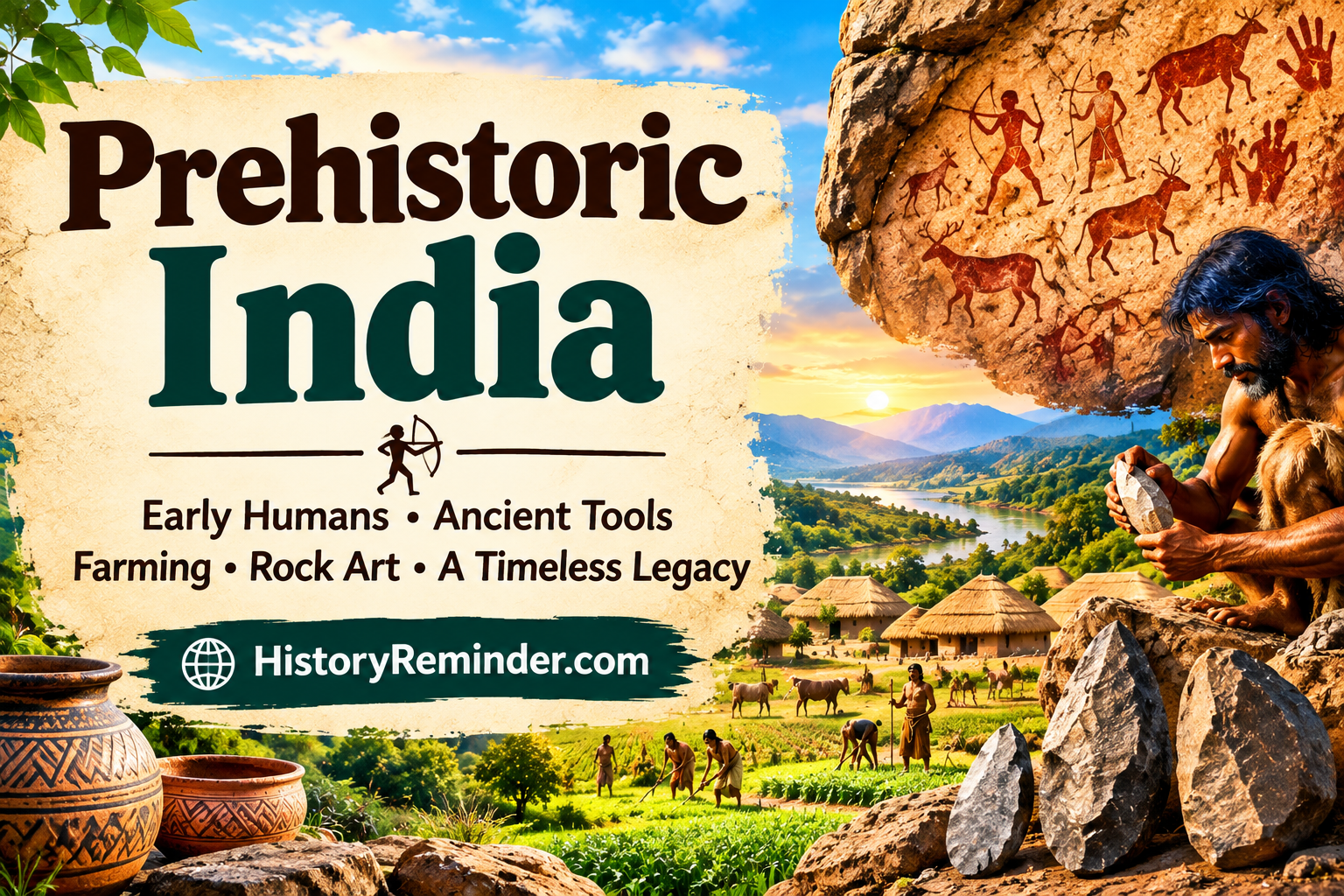
Because written records were unavailable for most of this period, archaeologists study stone tools, animal remains, plant remains, hearths, sediments, burials and rock paintings to understand how early communities lived. Recent archaeological research and improved scientific dating continue to refine our understanding of prehistoric India.
What Is Prehistoric India?
Prehistoric India generally refers to the period before written historical records became available. Archaeologists commonly divide this long period into the Palaeolithic, Mesolithic and Neolithic stages. In some classifications, the Chalcolithic period is also discussed alongside prehistoric or protohistoric cultures.
The prehistoric history of India was not a single, uniform process. Different parts of the subcontinent experienced technological and economic changes at different times. While some communities continued hunting and gathering, others gradually adopted farming, animal management, pottery and more permanent settlements.
This regional diversity is one of the most important characteristics of prehistoric India.
Palaeolithic Age: The Earliest Human Communities
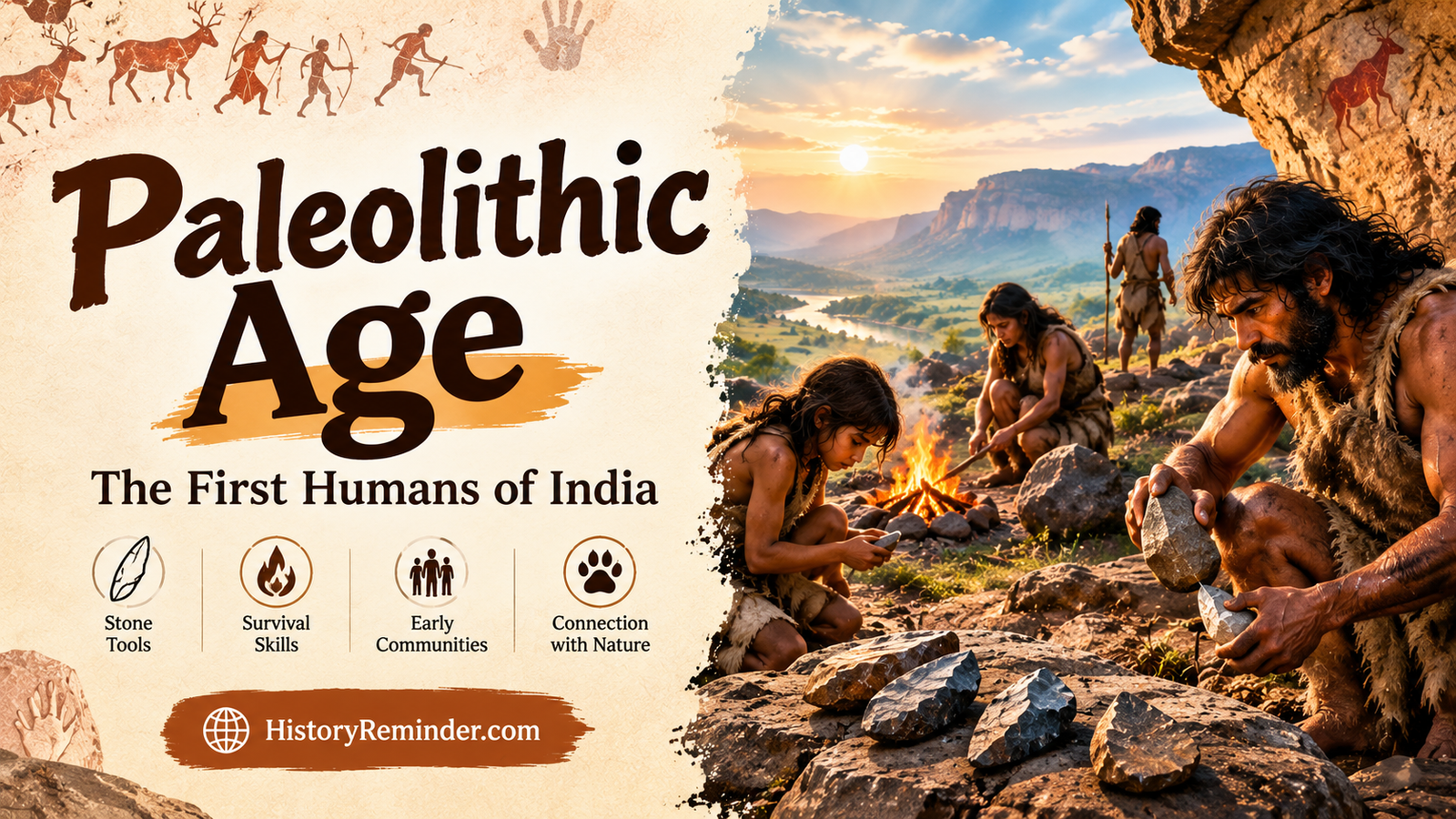
The Palaeolithic, or Old Stone Age, represents the longest phase of prehistoric India. It is generally divided into the Lower, Middle and Upper Palaeolithic.
Lower Palaeolithic
The Lower Palaeolithic is associated with large stone tools such as handaxes and cleavers, particularly those belonging to Acheulian technological traditions.
One of the most important sites is Attirampakkam in Tamil Nadu. Archaeological research places its Acheulian occupation broadly between about 1.07 and 1.77 million years ago, with a weighted mean around 1.5 million years. This makes Attirampakkam one of the oldest known Acheulian records in South Asia.
Evidence from different parts of India suggests that early hominins selected landscapes where water, stone raw materials and ecological resources were available. Therefore, the prehistoric history of India is also a history of changing relationships between humans and their environment.
Middle Palaeolithic
Middle Palaeolithic communities developed more varied flake-based technologies, including prepared-core techniques. Jwalapuram in Andhra Pradesh is particularly important for understanding this period.
Archaeological deposits at Jwalapuram preserve Middle Palaeolithic artefacts associated with the period surrounding the approximately 74,000-year-old Toba volcanic eruption. At Locality 22, researchers documented more than 1,600 stone artefacts, while other Jwalapuram localities provide evidence spanning approximately 80,000 to 38,000 years ago.
This evidence is important because it contributes to discussions about human occupation, technology and environmental change in South Asia. It also demonstrates why the prehistoric history of India cannot be understood only through a few famous archaeological sites.
Upper Palaeolithic
The Upper Palaeolithic saw further diversification of stone-tool traditions and changing patterns of resource use. Archaeological evidence indicates that late Pleistocene populations adapted to different ecological environments across the subcontinent.
Rather than following one identical cultural pattern, communities developed technologies suited to local resources and environmental conditions. This regional variation is an important feature of prehistoric India.
Mesolithic Age: Microliths and New Adaptations
The Mesolithic period is commonly associated with microliths, or small stone tools that could be used individually or fitted into composite implements.
Important Mesolithic evidence comes from sites such as Bagor in Rajasthan, Langhnaj in Gujarat and several sites in central India. Communities continued hunting, gathering and fishing while adapting to environmental changes following the Pleistocene.
Rock art provides another important source for understanding prehistoric India.
Bhimbetka Rock Shelters
The Rock Shelters of Bhimbetka in Madhya Pradesh are among the most significant archaeological locations for studying early human cultural expression in India. UNESCO describes five clusters of sandstone shelters containing paintings dating from the Mesolithic period through historical times. The site was inscribed on the UNESCO World Heritage List in 2003.
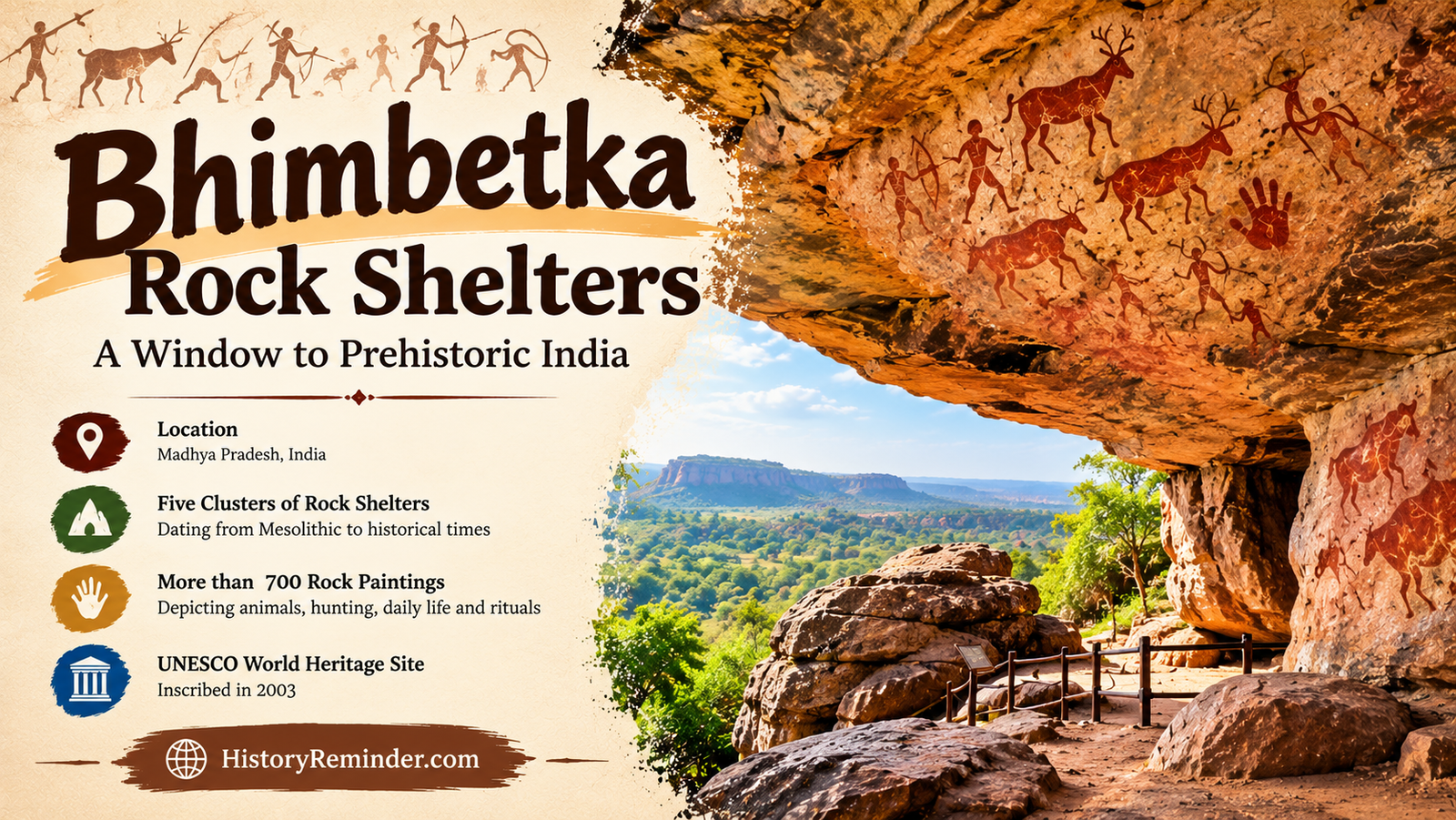
According to India’s Ministry of Culture, the Bhimbetka complex contains more than 700 rock paintings, depicting subjects including animals, hunting, daily activities and ritual scenes.
These paintings cannot provide a complete written account of ancient communities, but they offer valuable evidence about visual expression, human activities and the relationship between people and their surroundings.
Neolithic Age: Farming and Settled Communities
The Neolithic period brought major changes to food production, technology and settlement patterns. However, these changes did not happen everywhere at the same time.
Within present-day India, important Neolithic traditions are represented by sites including Burzahom in Kashmir, Koldihwa and Mahagara in Uttar Pradesh, Chirand in Bihar and several sites in southern India.
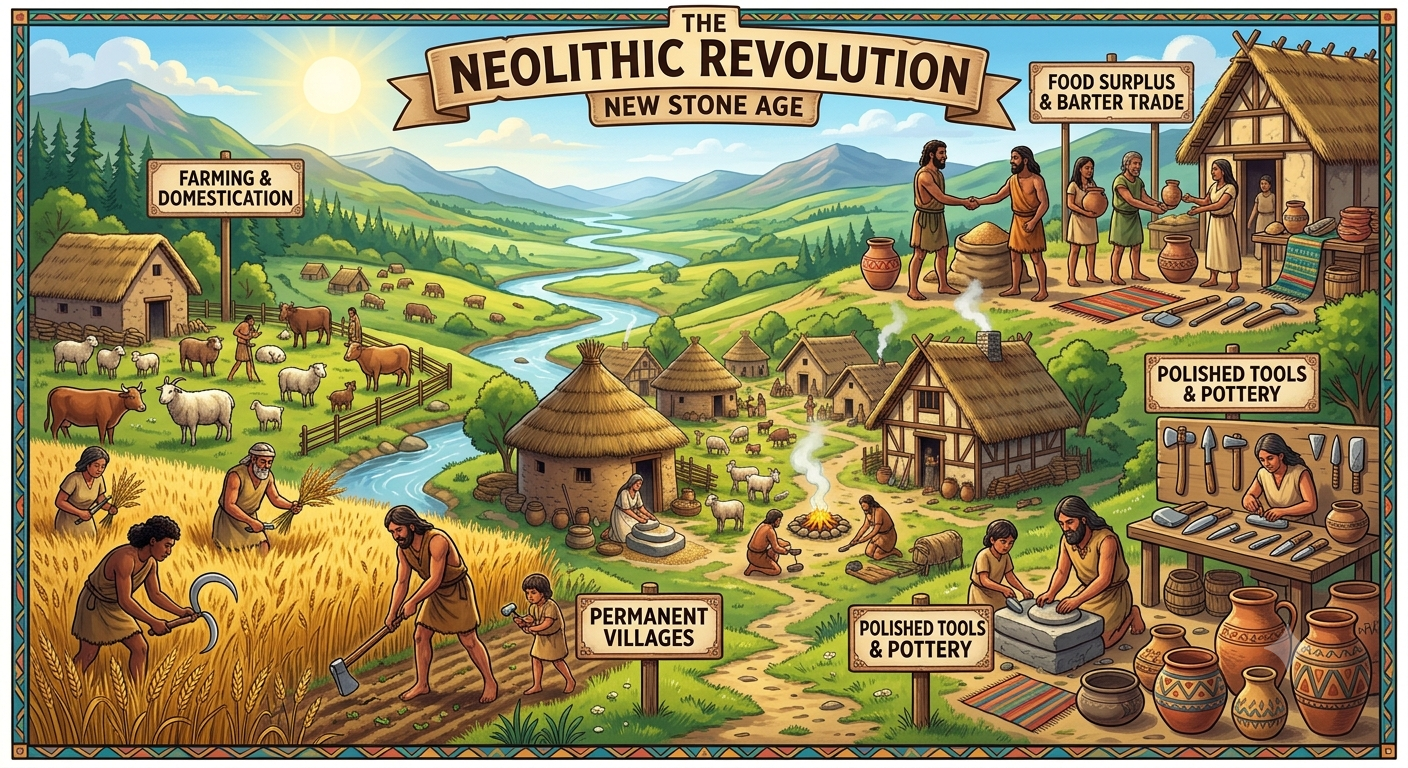
Burzahom is particularly notable for its pit dwellings, stone tools, bone tools and evidence of changing subsistence practices. Southern Indian Neolithic communities are associated with distinctive settlement traditions and evidence of animal management.
The prehistoric history of India therefore cannot be explained simply by saying that all hunter-gatherers suddenly became farmers. Archaeological evidence suggests gradual change, regional diversity and different pathways toward settled life.
From Stone Tools to Metal
In several regions, communities eventually began using copper and other metals alongside stone tools. These developments are generally associated with Chalcolithic cultures and increasingly complex village economies.
Agriculture, animal husbandry, pottery, craft production and exchange became increasingly important. These changes helped create economic and social foundations for later complex settlements.
This transition is significant when studying prehistoric India because the end of prehistory was not a single event. Different regions entered protohistoric or historic phases at different times.
How Do Archaeologists Study Prehistoric India?
Since written records are absent or extremely limited for most of prehistoric India, researchers rely on multiple forms of evidence.
Stone tools reveal technology, manufacturing methods and the selection of raw materials. Animal bones can provide information about hunting and diet. Plant remains and phytoliths can help reconstruct vegetation and food practices. Hearths and sediments provide information about human activity and environmental conditions. Rock paintings offer evidence of symbolic and cultural expression.
Scientific dating has transformed the study of the prehistoric history of India. Techniques such as radiocarbon dating, optically stimulated luminescence and other chronological methods help researchers establish more reliable dates for archaeological deposits.
Recent research continues to expand this picture. A 2024 PLOS ONE study of Retlapalle in Andhra Pradesh examined a Middle Palaeolithic assemblage and contributed to the growing body of chronometrically dated evidence for this period in India.
Why Prehistoric India Matters
Studying prehistoric India is not simply about memorising archaeological sites and dates. It helps explain the long-term development of human adaptation, mobility, technology and settlement in South Asia.
It also provides the foundation for understanding later developments, including early farming communities, village cultures and eventually the Indus or Harappan civilisation.
The prehistoric history of India demonstrates that technological and social change happened gradually. Communities experimented with different tools, food sources, settlement patterns and ways of adapting to changing environments.
Quick Timeline of Prehistoric India
| Period | Major Features |
|---|---|
| Lower Palaeolithic | Handaxes, cleavers and early stone-tool traditions |
| Middle Palaeolithic | Flake technologies and prepared-core techniques |
| Upper Palaeolithic | Diversification of tools and resource use |
| Mesolithic | Microliths, hunting, gathering, fishing and rock art |
| Neolithic | Farming, animal management, pottery and settled communities |
| Chalcolithic | Copper use alongside stone and increasingly complex villages |
Conclusion
Prehistoric India represents one of the longest and most fascinating chapters of South Asian history. From the early Acheulian evidence of Attirampakkam to the Middle Palaeolithic record of Jwalapuram, the microlithic traditions of the Mesolithic and the farming communities of the Neolithic, archaeological evidence reveals a long history of innovation and adaptation.
The prehistoric history of India is also an evolving field. New excavations, improved dating methods and environmental research continue to refine our understanding of early populations. Recent work at sites such as Retlapalle shows that important questions about India’s Middle Palaeolithic remain under active investigation.
Ultimately, studying prehistoric India means looking beyond written history and learning how archaeologists reconstruct the lives of people who lived thousands and even millions of years ago. Their tools, settlements, artwork and environmental footprints provide the foundations for understanding the remarkable human story of the Indian subcontinent.
Pingback: Ancient History Of India Timeline: A Complete Guide. - historyremindercom