

The Indus Valley Civilisation was one of the earliest urban cultures of South Asia and an important chapter in the ancient history of the Indian subcontinent. Also called the Harappan Civilisation, it developed across a vast geographical region covering parts of present-day India and Pakistan. Its mature urban phase is generally dated to about 2600–1900 BCE, while earlier and later phases extended beyond these dates. The Indus Valley Civilisation is known for planned settlements, sophisticated drainage systems, craft production, long-distance trade, distinctive pottery, seals and an undeciphered script.
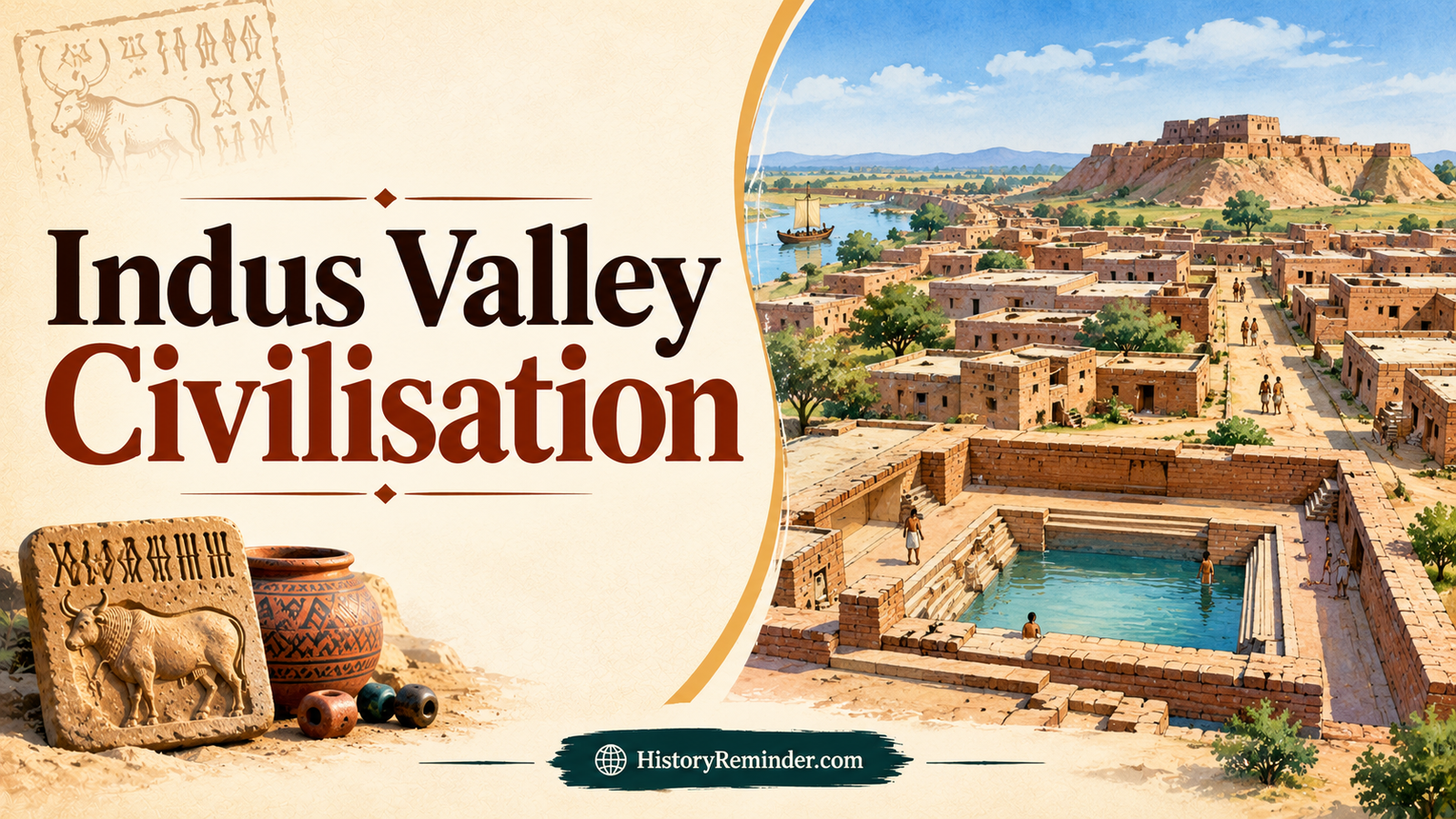
The Indus Valley Civilisation is especially important because it demonstrates that complex urban life developed in South Asia thousands of years ago. Archaeological discoveries at Harappa, Mohenjo-daro, Dholavira, Rakhigarhi, Lothal, Kalibangan and other settlements reveal communities with sophisticated approaches to construction, water management, craft production and exchange.
What Was the Indus Valley Civilisation?
The Indus Valley Civilisation was a Bronze Age civilisation that emerged from earlier farming and village traditions in northwestern South Asia. Historians and archaeologists often use the term Harappan Civilisation because Harappa was one of the first major sites to be excavated and because the culture extended far beyond the Indus River valley.
The Harappan Indus Valley Civilization is usually studied through three broad stages: Early Harappan, Mature Harappan and Late Harappan. The Mature Harappan phase, around 2600–1900 BCE, represents the period when large cities and extensive regional networks were at their height. The Harappan Indus Valley Civilization, however, did not appear suddenly; it developed from earlier settlements and cultural traditions.
Geographical Extent of the Civilisation
One remarkable feature of the Indus Valley Civilisation was its enormous geographical spread. Archaeological sites have been identified across the Indus and Ghaggar-Hakra regions, Gujarat, Rajasthan, Haryana, Punjab and parts of western Uttar Pradesh, as well as across present-day Pakistan.
This wide distribution shows that Harappan communities were not limited to a single river valley. They occupied environments ranging from fertile plains and river systems to semi-arid landscapes and coastal regions.
Dholavira
Dholavira, located in Gujarat’s Kachchh region, demonstrates how Harappan communities adapted to a dry environment. UNESCO describes Dholavira as a well-preserved urban settlement occupied from approximately 3000 to 1500 BCE, with fortified areas, streets, reservoirs, drainage systems, craft workshops and a cemetery.
Dholavira provides evidence of urban planning, water management, manufacturing and trade. The settlement was occupied for around 1,500 years, making it an important site for understanding the development and transformation of Harappan society.
Rakhigarhi
Rakhigarhi in Haryana is another major archaeological site. According to the Ministry of Culture, the settlement covers approximately 550 hectares and is widely recognised as the largest known settlement of the Indus-Saraswati Civilisation.
Archaeological investigations have revealed planned settlements, drainage systems, craft-production areas, trade networks and burial grounds. These discoveries make Rakhigarhi particularly important for understanding the Harappan Indus Valley Civilization.
Urban Planning and Architecture
The cities of the Indus Valley Civilisation are particularly famous for their organised layouts. Many settlements contained streets, houses, drainage channels, wells and public structures. Standardised brick dimensions were widely used, although construction methods varied across different regions.
Mohenjo-daro is famous for its carefully planned streets and the Great Bath. Harappa provides evidence of large-scale settlement planning, craft production and other organised activities. Dholavira is particularly notable for its reservoirs and water-harvesting systems.
Dholavira’s water management represents one of the most impressive examples of environmental adaptation within the Harappan Indus Valley Civilization. Its reservoirs and drainage arrangements provide evidence of sophisticated water management in an arid environment.
The importance of Dholavira has also received international recognition. It was inscribed on the UNESCO World Heritage List in 2021 for its outstanding evidence of urban planning, construction, water management, manufacturing and trade.
Agriculture, Economy and Trade
Agriculture formed an important part of the Indus Valley Civilisation economy. Communities cultivated crops including wheat and barley and kept domesticated animals. Archaeological evidence from different regions also suggests variation in crops and subsistence practices.
Craft production was another important economic activity. Archaeologists have discovered beads, shell objects, pottery, metal artefacts, faience objects and ornaments made from semi-precious stones.
Dholavira provides particularly strong evidence of craft activity. Archaeological evidence includes bead-processing workshops and materials such as copper, shell, agate-carnelian, steatite, lead, limestone, gold and ivory.
The Harappan Indus Valley Civilization was also connected to wider exchange networks. Archaeological evidence indicates contacts extending beyond the Indian subcontinent, including connections with Mesopotamia and regions associated with ancient Gulf trade. Such networks helped transport raw materials and finished products across considerable distances.
Writing, Seals and the Indus Script
The Indus script remains one of the biggest unanswered questions surrounding the Indus Valley Civilisation. Archaeologists have discovered numerous seals and inscriptions containing sequences of symbols. Many seals also contain representations of animals and other motifs.
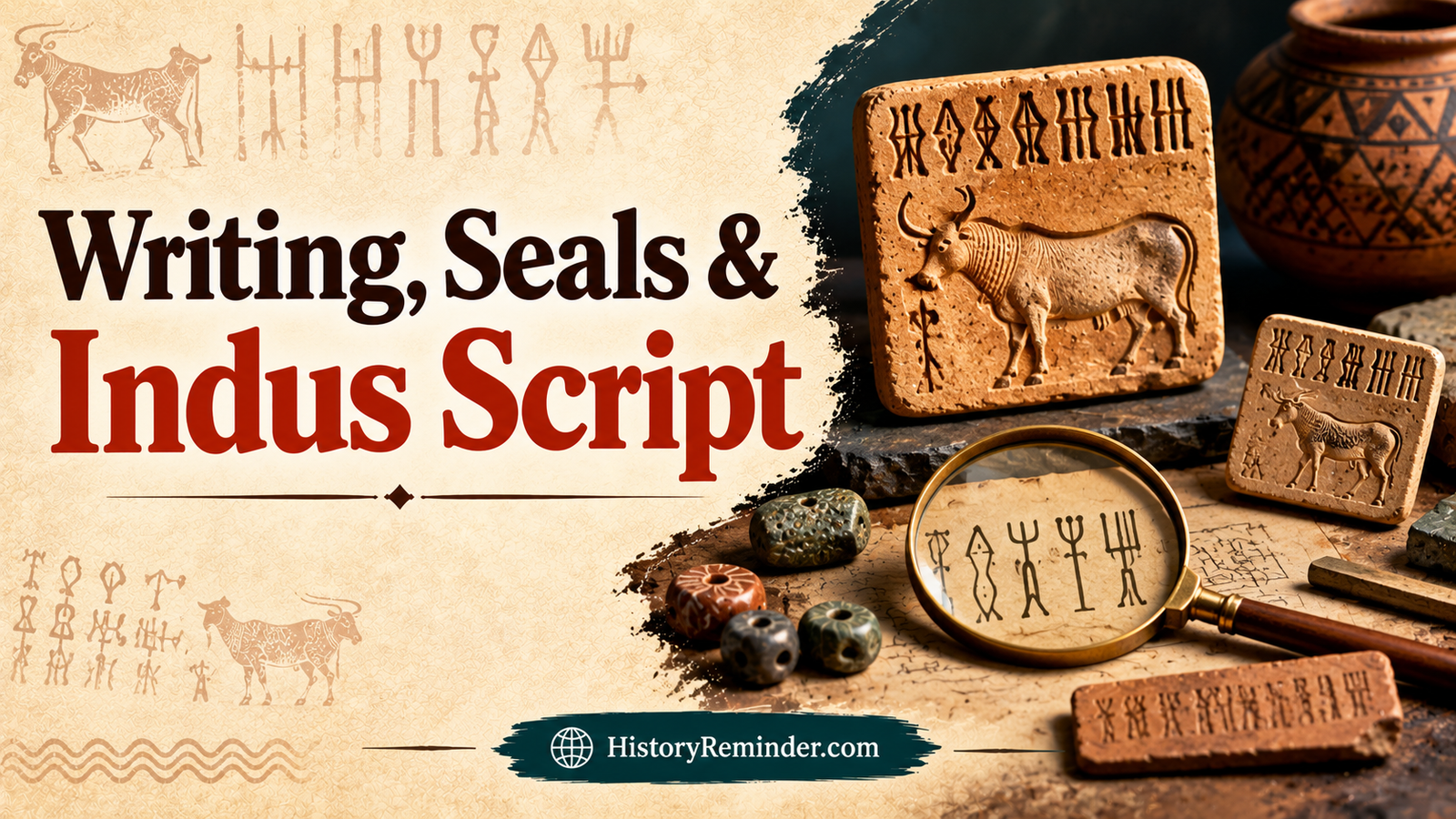
Because the script has not been conclusively deciphered, historians cannot yet directly read the administrative, religious or personal messages that these inscriptions may have recorded.
This is an important distinction between the Harappan Indus Valley Civilization and later periods of Indian history. Much of what historians know about Harappan society comes from archaeology rather than readable historical texts.
Religion and Society
The religious and social life of the Indus Valley Civilisation remains an area of scholarly discussion. Archaeologists have discovered figurines, seals, ritual objects, burial sites and structures that may have had ceremonial functions.
However, interpretations need to be made carefully because the Indus script remains undeciphered. Objects such as figurines and seals can provide clues, but they do not automatically reveal the exact beliefs of the people who created them.
There is evidence of social organisation within Harappan settlements. Large urban centres, standardised construction, specialised craft production and extensive trade networks indicate substantial coordination. However, the exact political structure of Harappan society remains uncertain.
Daily Life and Technology
The Harappan Indus Valley Civilization demonstrated considerable technological skill. People used copper and bronze objects, specialised stone tools, pottery, ornaments and carefully produced weights.
Standardised weights are particularly important because they indicate that measurement played a role in economic activity and exchange.
Homes varied in size and design, while archaeological evidence from settlements reveals access to wells, drains and working areas. Pottery, toys, beads, tools and household objects provide valuable clues about everyday life.
Rather than viewing Harappan cities simply as collections of monumental structures, archaeologists increasingly study ordinary houses, workshops, streets and objects to understand how people actually lived.
Rakhigarhi: Latest Archaeological Discoveries
Recent research is providing new information about the Indus Valley Civilisation. During the 2025–26 excavation season, the Archaeological Survey of India reported the discovery of eight burials at Rakhigarhi’s Mound 7, an area associated with a cemetery. Three complete human skeletons, along with skeletal fragments from other burials, were subsequently transferred to the Anthropological Survey of India (AnSI) for detailed scientific examination in June 2026.
The Ministry of Culture stated that Rakhigarhi’s recent excavation evidence includes planned settlements, drainage systems, craft-production centres, trade networks and burial grounds. The newly transferred remains are expected to support multidisciplinary research into the ancient population.
This development is particularly significant because researchers can apply modern scientific approaches to archaeological remains. Studies of skeletal biology, ancient DNA, health and diet can potentially provide additional information about people who lived in the region thousands of years ago. However, results from the newly transferred remains should not be treated as established findings until the scientific investigations are completed.
The new Rakhigarhi research demonstrates that the study of the Harappan Indus Valley Civilization is still developing and that archaeological sites can continue to produce important evidence long after their initial discovery.
Why Did the Indus Valley Civilisation Decline?
The decline of the Indus Valley Civilisation was gradual rather than the result of one universally accepted event. Around and after 1900 BCE, many major urban centres declined, populations shifted and settlement patterns changed.
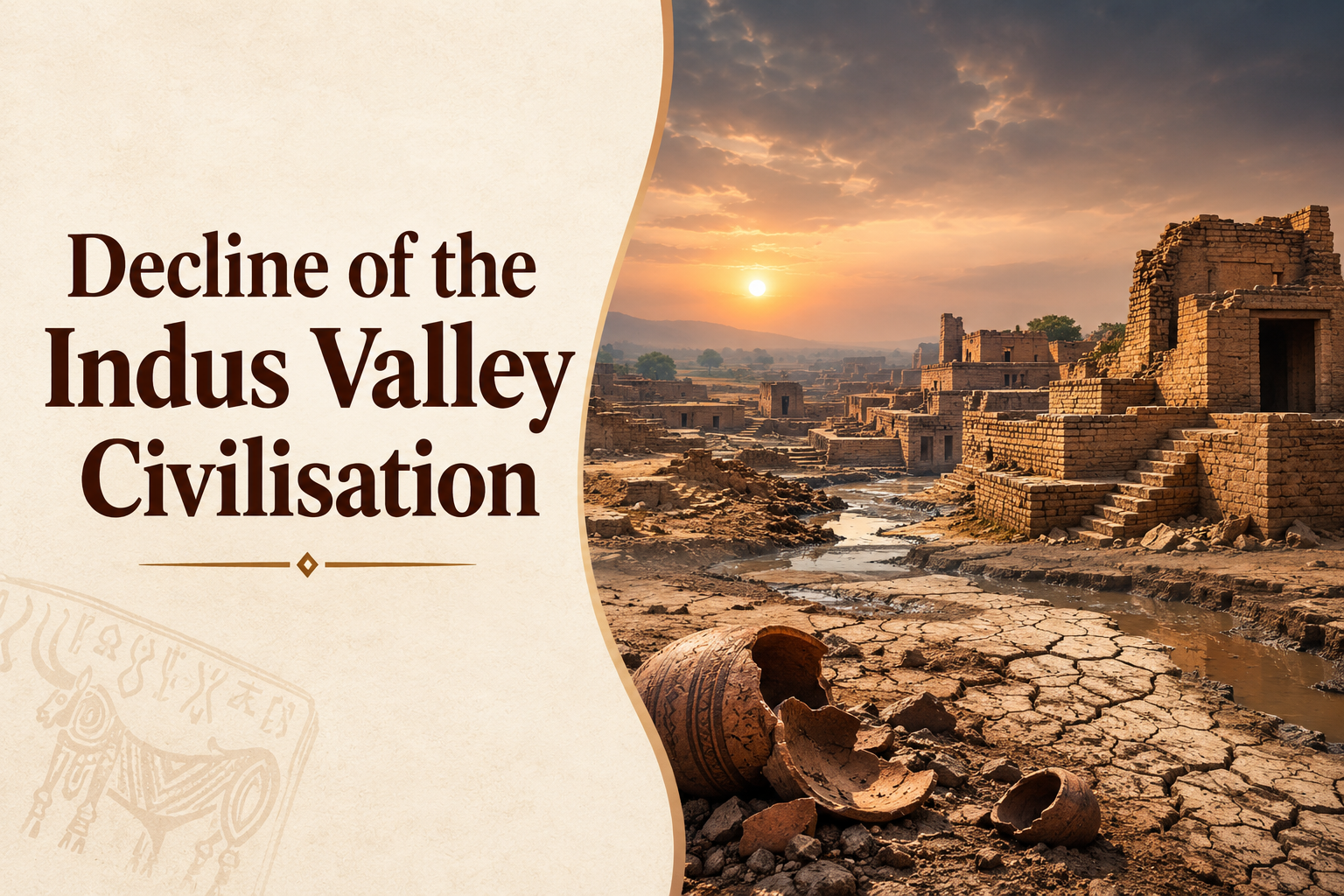
Researchers have investigated several possible factors, including changes in river systems, climate variability, ecological pressures, changing trade networks and regional economic transformation.
Current archaeological evidence does not support a simple one-cause explanation. Different areas experienced different changes at different times, and several Harappan traditions continued into later regional cultures.
Therefore, the decline of the Harappan Indus Valley Civilization is better understood as a long process of transformation rather than an overnight collapse.
Legacy of the Indus Valley Civilisation
The legacy of the Indus Valley Civilisation can be seen throughout the archaeological record of South Asia. Its planned settlements, craft traditions, measurement systems, water-management techniques and long-distance exchange networks demonstrate the complexity of Bronze Age societies.
Dholavira’s UNESCO recognition has further increased international attention to Harappan heritage. The site demonstrates how an urban community adapted its architecture and water-management systems to a challenging environment.
The Harappan Indus Valley Civilization is also important for understanding the development of urbanism in South Asia. Its settlements demonstrate that sophisticated city planning, craft specialisation and regional exchange existed thousands of years before many later historical kingdoms emerged.
For students studying an ancient history timeline, the Indus Valley Civilisation provides an important link between prehistoric communities and later historical cultures of South Asia. It helps explain how farming settlements gradually developed into complex urban centres and how communities organised production, trade and everyday life on a large scale.
Indus Valley Civilisation Timeline
| Period | Approximate Date | Major Features |
|---|---|---|
| Early Harappan | c. 3300–2600 BCE | Expanding settlements, farming and regional cultures |
| Mature Harappan | c. 2600–1900 BCE | Major cities, urban planning, trade and craft production |
| Late Harappan | After c. 1900 BCE | Urban decline, regionalisation and changing settlement patterns |
The exact dates can vary depending on the archaeological site and chronological framework used. The Mature Harappan period of approximately 2600–1900 BCE is the most commonly used timeframe for the civilisation’s urban peak.
Conclusion
The Indus Valley Civilisation remains one of the most important archaeological subjects in South Asian history. From the planned streets of Mohenjo-daro and Harappa to the reservoirs of Dholavira and the extensive settlement at Rakhigarhi, archaeological evidence reveals a diverse and highly organised Bronze Age world.
The continuing excavation and scientific study of sites such as Rakhigarhi show that the story is still developing. New archaeological discoveries, scientific dating, skeletal research and environmental studies are helping researchers ask more precise questions about the people who built these settlements.
Understanding the Harappan Indus Valley Civilization therefore requires more than memorising dates and archaeological sites. It involves examining how people adapted to their environments, developed technologies, exchanged goods and created urban communities.
As new evidence emerges, the Indus Valley Civilisation will continue to play a central role in understanding the ancient history of the Indian subcontinent. The combination of archaeological evidence from established sites and new scientific investigations makes the study of the Harappan Indus Valley Civilization an evolving field—one where discoveries made today can add new dimensions to our understanding of South Asia’s earliest urban traditions.
Pingback: Ancient History Of India Timeline: A Complete Guide. - historyremindercom