
Ancient History Of India Timeline: A Complete Guide
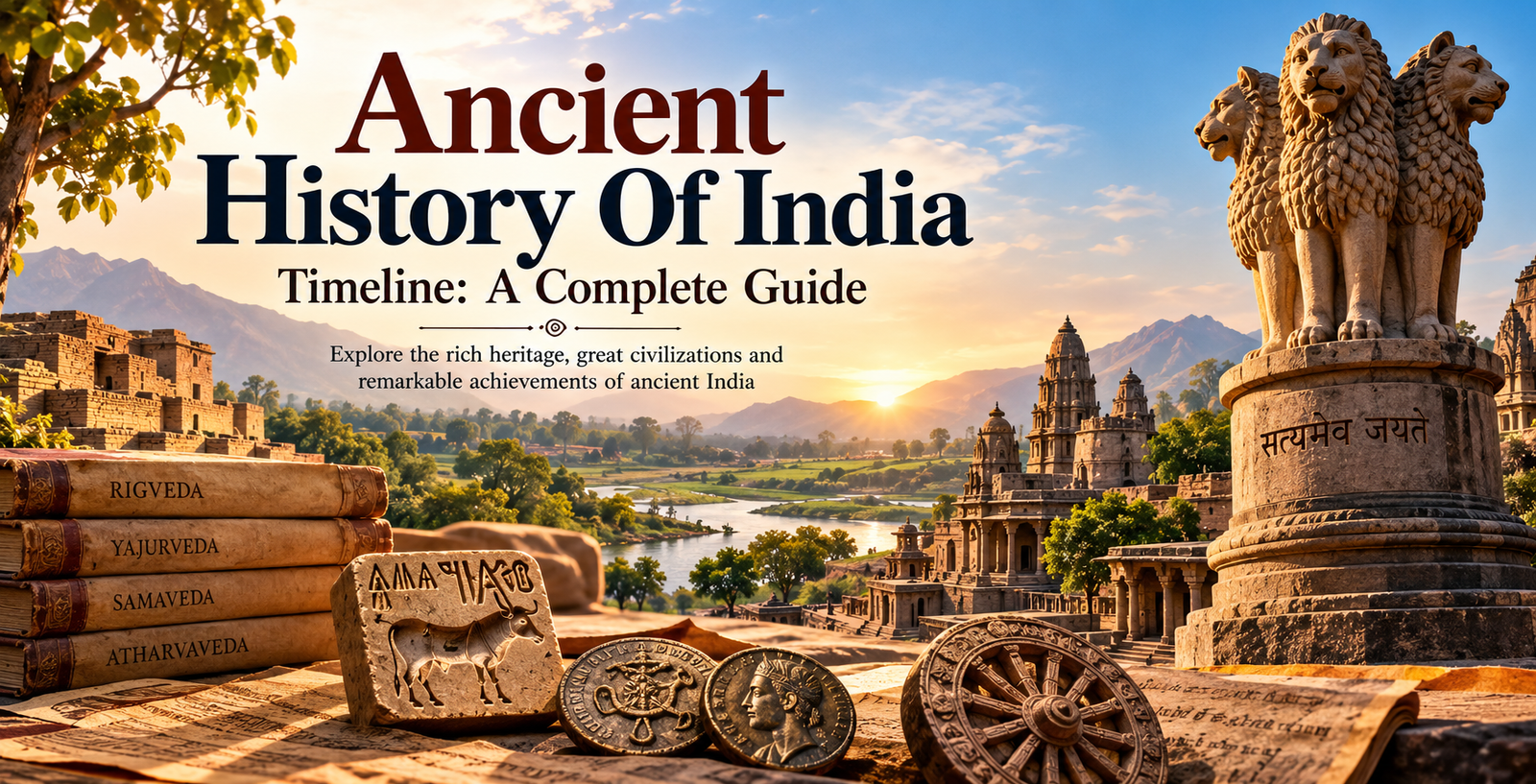
The Ancient History Timeline of India covers thousands of years of human settlement, cultural development, political change, scientific achievements, religious traditions, trade, art and architecture. From prehistoric communities and the Indus Valley Civilisation to the Mauryan and Gupta periods, ancient India developed diverse societies that left behind archaeological, literary and artistic evidence.
Understanding the Ancient History Timeline helps students connect major events, dynasties and cultural developments in chronological order. However, ancient dates are often approximate because historians reconstruct the past using archaeological remains, inscriptions, coins, literary texts and accounts of foreign travellers.
Ancient History Timeline of India at a Glance
| Period | Approximate Date | Major Developments |
|---|---|---|
| Prehistoric India | Before 2500 BCE | Stone tools, hunting, agriculture and early settlements |
| Indus Valley Civilisation | c. 2600–1900 BCE | Planned cities, drainage systems, crafts and long-distance trade |
| Vedic Period | c. 1500–600 BCE | Vedic traditions, agriculture, settlements and social developments |
| Mahajanapadas | c. 600–300 BCE | Growth of major states, cities and new religious movements |
| Mauryan Empire | c. 321–185 BCE | Large empire under Chandragupta Maurya and Ashoka |
| Post-Mauryan Period | c. 200 BCE–300 CE | Regional kingdoms, trade and cultural interaction |
| Gupta Period | c. 4th–6th century CE | Developments in literature, science, art and culture |
| Early Regional Kingdoms | c. 6th–8th century CE | Growth of regional powers, temples and distinctive artistic traditions |
Prehistoric India
The earliest part of the Ancient History Timeline begins with prehistoric communities. Before written records became available, historians and archaeologists depended mainly on physical remains such as stone tools, pottery, bones, paintings and settlement sites.
Early humans lived through different stages of the Stone Age. Hunting and gathering were important in earlier periods, while later communities increasingly adopted agriculture and animal domestication. The development of settled agricultural communities created the conditions for more complex societies.
Indus Valley or Harappan Civilisation
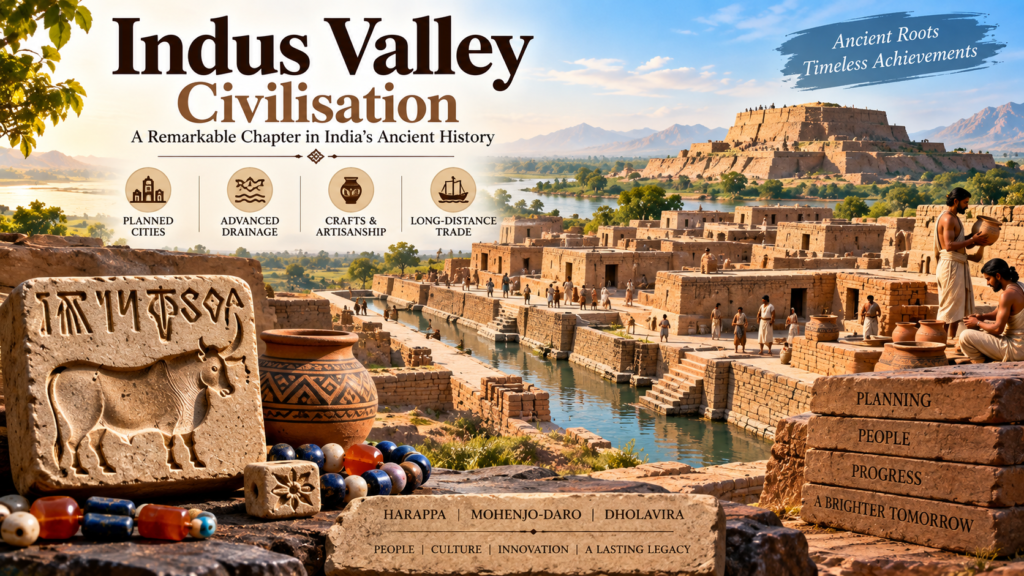
The Indus Valley Civilisation is one of the most important stages in the Ancient History Timeline. Its mature phase is generally dated to around 2600–1900 BCE. Major archaeological sites include Harappa, Mohenjo-daro, Dholavira and several other settlements spread across a large geographical region.
Harappan cities are particularly known for their planned layouts, drainage systems, brick architecture, craft production and trade networks. Archaeological discoveries include seals, pottery, beads, tools, ornaments and other objects that provide evidence about everyday life and economic activity.
The civilisation also maintained connections with regions beyond the Indian subcontinent. Archaeological and textual evidence helps researchers study these networks and understand the Harappan economy and material culture.
Vedic Period
The Vedic period represents another major stage in the Ancient History Timeline. Vedic literature provides important evidence for understanding religious practices, social organisation, political institutions and cultural traditions of the period.
Agriculture and settled communities became increasingly important, while political organisation developed in different forms. Over time, larger territorial units emerged, creating a transition towards the age of the Mahajanapadas.
Mahajanapadas and the Rise of New Religions
Around the 6th century BCE, the Ancient History Timeline enters a period of significant political and intellectual change. The subcontinent witnessed the rise of sixteen major states traditionally known as the Mahajanapadas.
Urban centres expanded and trade became increasingly important. This period also saw the emergence and growth of Buddhism and Jainism. The teachings associated with Gautama Buddha and Mahavira became influential religious and philosophical traditions.
Magadha gradually emerged as a powerful state. Its political expansion eventually created the foundation for the Mauryan Empire.
Mauryan Empire
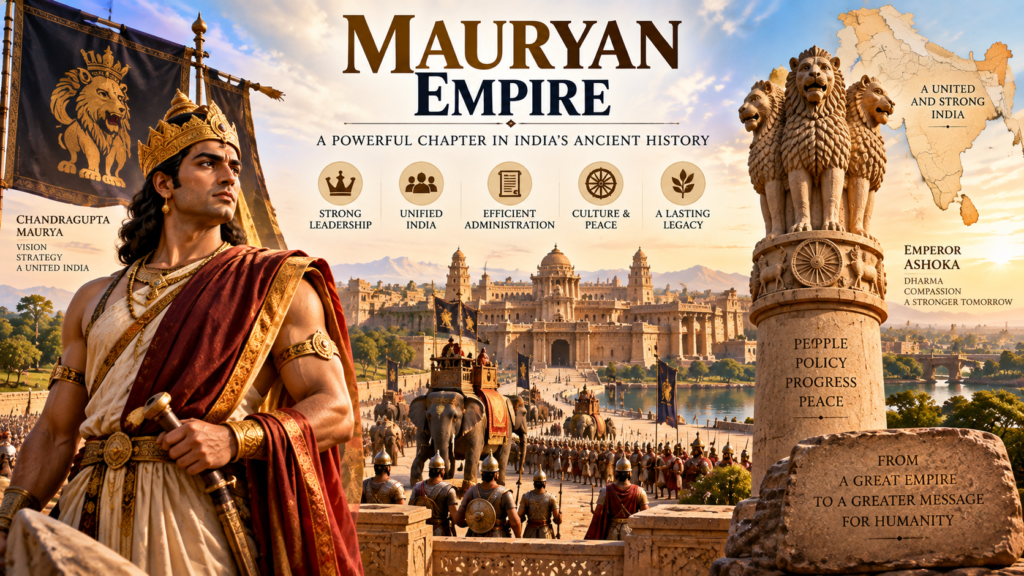
The Mauryan Empire is one of the most significant political developments in the Ancient History Timeline. Founded by Chandragupta Maurya around the late 4th century BCE, the empire grew into a large political system.
Ashoka became one of the best-known Mauryan rulers. His inscriptions, found across different parts of the subcontinent, provide valuable primary evidence about administration, social ideas and his policy of dhamma.
The Mauryan period is also important for the study of art and architecture. Pillars, stupas and other monuments demonstrate the development of stone architecture and artistic traditions. Ashokan inscriptions are particularly valuable because they provide direct historical evidence from the period.
Post-Mauryan India
After the Mauryan Empire, the Ancient History Timeline became increasingly characterised by regional political powers and cultural interaction. Several dynasties and kingdoms controlled different parts of the subcontinent at different times.
Trade networks expanded across land and sea routes. Contacts with Central Asia, the Mediterranean world and Southeast Asia contributed to exchanges involving goods, artistic ideas, technology and cultural practices.
Buddhism also spread through different regions, while Buddhist art and architecture developed at sites such as stupas, monasteries and cave complexes.
Gupta Period
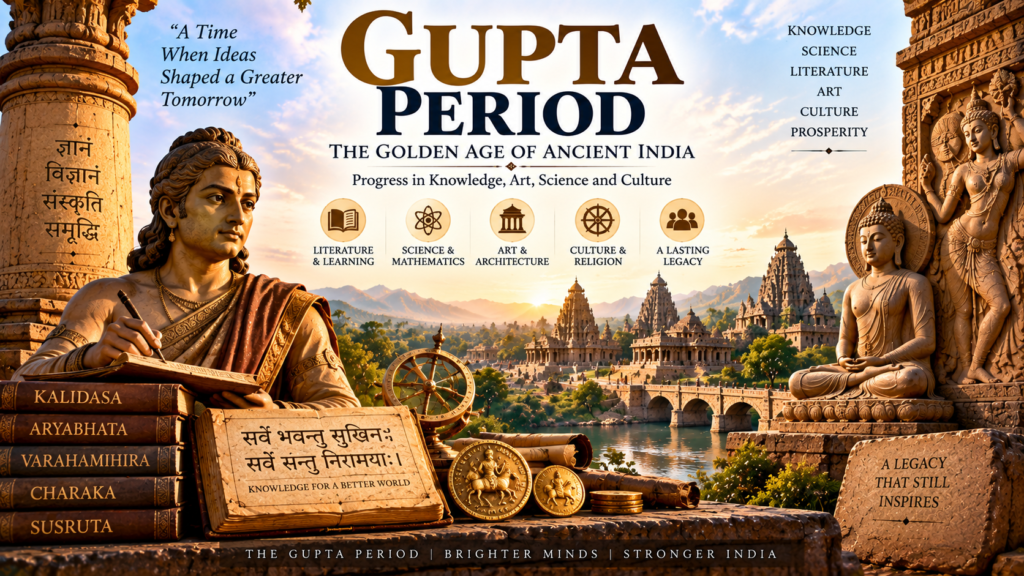
The Gupta period occupies an important position in the Ancient History Timeline and is generally associated with the 4th to 6th centuries CE. Several rulers of the Gupta dynasty contributed to political expansion and cultural development.
Literature, mathematics, astronomy, medicine, sculpture and architecture developed during this broader period. Sanskrit literature became particularly influential, while artistic traditions produced important sculptures, temples and other monuments.
It is important to remember that the term “Golden Age” is an interpretation used by some historians rather than a description of every aspect of life for every community. Historical development differed across regions and social groups.
Science, Education, Art and Architecture in Ancient India
A complete Ancient History Timeline should not focus only on rulers and wars. Ancient Indian history also includes developments in knowledge, education, literature, mathematics, astronomy, medicine, sculpture and architecture.
Ancient educational centres such as Takshashila and Nalanda became associated with advanced learning and intellectual exchange. Mathematical and astronomical traditions developed through the work of scholars whose writings influenced later knowledge systems.
Architecture also changed considerably across different periods. Stupas, rock-cut caves, pillars, temples and forts provide material evidence of changing religious, artistic and technological traditions.
How Do Historians Reconstruct Ancient Indian History?
The Ancient History Timeline is reconstructed using several categories of historical evidence. Archaeological sources include buildings, tools, pottery, sculptures, seals, coins and other material remains.
Literary sources are another important category. These include religious texts, philosophical works, historical accounts and writings associated with different communities. Foreign accounts, including those of Greek and Roman writers, can also provide information about ancient Indian society, trade and political conditions.
Inscriptions are particularly valuable because they can provide information about rulers, administration, donations, religious activities and public policies. Archaeological research and scientific methods continue to improve our understanding of India’s ancient past.
Ancient History Timeline: Quick Revision
- Prehistoric Period: Early humans, stone tools, hunting and agriculture.
- Indus Valley Civilisation: Planned cities, drainage, crafts and trade.
- Vedic Period: Vedic traditions, agriculture and developing political communities.
- Mahajanapadas: Major states, urban growth and new religious movements.
- Mauryan Empire: Large-scale political unification and Ashokan inscriptions.
- Post-Mauryan Period: Regional kingdoms, trade and cultural exchanges.
- Gupta Period: Important developments in literature, science, art and culture.
- Early Regional Kingdoms: Expansion of regional political powers and architectural traditions.
Why the Ancient History Timeline Matters
Studying the Ancient History Timeline makes it easier to understand how Indian society developed over long periods. It connects archaeological discoveries with political history, religion, economy, technology, literature and art.
For students preparing for competitive examinations, a chronological approach can also make revision easier. Instead of memorising isolated facts, learners can connect important sites, rulers, texts, movements and cultural developments with the historical period in which they occurred.
Conclusion
The Ancient History Timeline of India represents a long and complex history extending from prehistoric communities to powerful empires and regional kingdoms. The Indus Valley Civilisation, Vedic period, Mahajanapadas, Mauryan Empire, post-Mauryan kingdoms and Gupta period each contributed different elements to India’s historical development.
Understanding this chronology alongside archaeological, literary and inscriptional evidence provides a more complete picture of ancient India. Rather than viewing history as a simple sequence of rulers, the Ancient History Timeline should be studied as an interconnected story of people, settlements, ideas, economies, cultures and technological achievements.